

If you’ve danced on social floors in Mumbai long enough—gymkhanas, weddings, socials, random pop-up jive nights—you start noticing patterns. Not steps. Not styles. Patterns in people.
I’ve been dancing for years, and there’s one mistake I’ve made myself—and watched countless others make—that quietly ruins otherwise excellent dancing. It’s not obvious. It doesn’t look wrong. In fact, technically, everything might be perfect.
And yet… something feels off.
Picture this.
A guy walks onto the floor. Confident. Sharp. He asks a new girl to dance. The music starts. His footwork is clean. Timing immaculate. He knows exactly which leg goes back on which count. His hands are precise, controlled, textbook-perfect.
But his face?
Blank.
He stares past the lady’s right shoulder, somewhere into the middle distance, like he’s watching a ship disappear into the Arabian Sea. No eye contact. No smile. No visible enjoyment. From the audience’s point of view, it looks less like a dance and more like a very serious practical exam.
I used to be that guy.
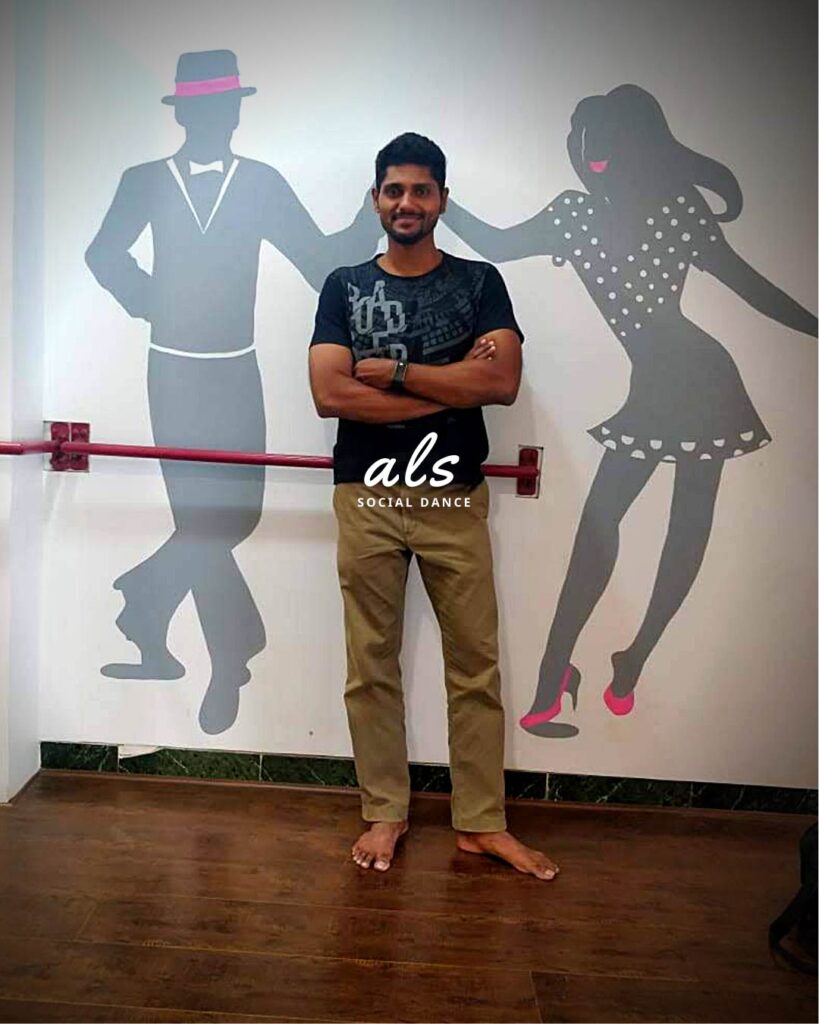
People would come up to me and say, “Alvito, you dance really well.” And I took that as validation. Until one evening, an elderly couple stepped onto the floor. No fancy footwork. No spins. No drops. Just a simple basic, done slowly.
But they smiled at each other. They laughed. They connected.
When they walked off the floor, people clapped.
Nobody clapped for me.
That moment stuck. My steps were flashier. My technique was stronger. So why them?
Because what people respond to isn’t footwork.
It’s connection.
And connection starts way before your legs move.
If you watch jive or bachata videos online, you’ll see this pattern everywhere. The leader is often deep in thought—counting, planning, navigating, worrying about flowcraft and space. The follower, on the other hand, reacts emotionally. When a move surprises her, her eyes light up. She smiles. You can see the enjoyment.
There’s a visible emotional gap between leaders and followers.
And this is where the golden rule quietly enters.
The Golden Rule: Smile First, Dance Second
On a social dance floor, your face matters more than your feet.
You don’t need fancy lunges. You don’t need drops. You don’t need to impress anyone. If you smile—genuinely—you automatically create safety, warmth, and accessibility. The irony is that when you stop trying so hard to make your partner have fun, and instead allow yourself to enjoy the dance, your partner enjoys it more.
Smiling communicates:
-
“I’m relaxed”
-
“You’re safe with me”
-
“We’re doing this together”
As a man, smile—and suddenly more women want to dance with you.
As a woman, smile—and suddenly more men approach you.
No choreography required.
Now… once that’s sorted, let’s talk about the silver rule.
Because at the end of the night, people don’t remember how clean your footwork was.
They remember how you made them feel. And that starts with a smile—the kind you had as a kid, before dancing became something to “get right.”
The Silver Rule: Elbows Are Not Decorative
Ah yes. Spaghetti arms.
I see this a lot—especially among followers. Arms so loose they seem to have no bones. Spins go wide. Movements spill outward. Suddenly, she’s taking out the couple behind her like a human wrecking ball.
And no—just because you’re wearing spaghetti straps does not mean your arms need to match.
Soft elbows are good. Dead elbows are not.
When there’s no resistance:
-
Spins slow down
-
Movement looks clumsy
-
The lead has to work twice as hard
-
Space gets eaten up (and people get hit)
I’ve seen girls literally dash into other couples because their arms are flinging outward uncontrollably. Social floors are shared spaces. Your dance shouldn’t inconvenience five other people.
Resistance doesn’t mean stiffness. It means awareness. A gentle tone in the elbows. Enough connection so the movement stays compact, controlled, and musical.
But—and this is important—the silver rule is still secondary.
You can fix resistance. You can clean up arms. You can refine technique.
But if you’re not smiling? None of that matters.
Because at the end of the night, people don’t remember how clean your footwork was.
They remember how you made them feel.
And that starts with a smile—the kind you had as a kid, before dancing became something to “get right.”
That’s the real rule of Mumbai’s social dance floors.