
If you’ve spent any time on the Mumbai jive scene — at Bandra jive nights, Malad social dances, a wedding in Andheri, or those intense Sunday classes in Churchgate — you’ve probably noticed the same unspoken rule playing out again and again:
The man leads.
The woman follows.
Nobody formally announced it, but somehow everyone knows.
And yet—five minutes into the music—you’ll also see girl couples happily jiving away, one girl leading, the other following… until the follower decides, “Actually, I’ve got this,” and spins herself anyway. Which immediately raises the question:
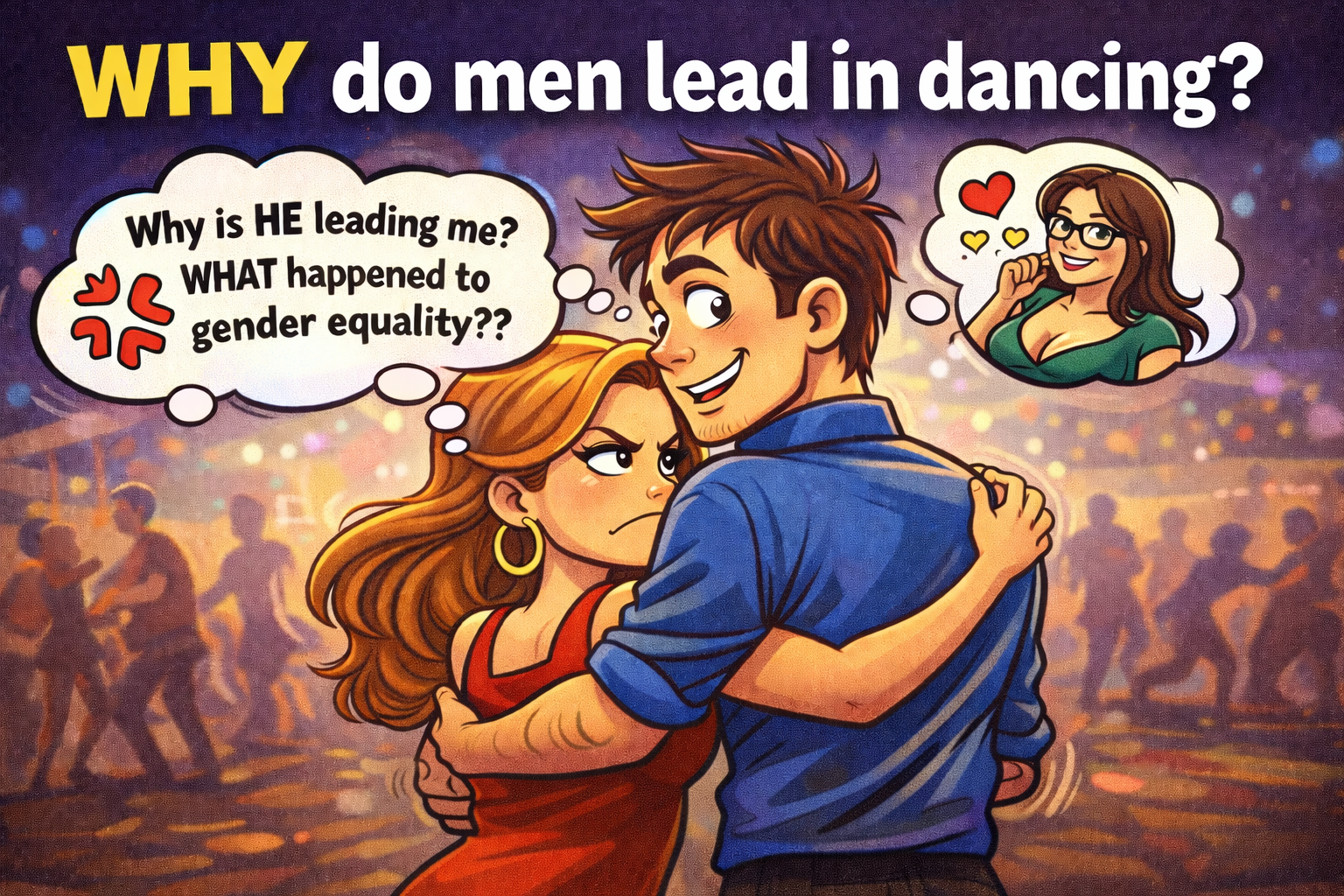
Why do men usually lead in the first place? Shouldn’t there be gender equality when it comes to leading?
Let’s get into it—politely, sarcastically, and with just enough truth to make everyone slightly uncomfortable.
One often does see women dancing with women, and occasionally men dancing with men (deliberately badly, and with big cheesy grins). Almost always, though, the best dances one witnesses in an evening of social dance will be between one man and one woman. Partly this is because of reason five, above, that each has specialised, partly also because the man will probably be taller and stronger, but mostly because there is something in the chemistry between men and women which means that each dancer raises his level.
-https://www.lloydianaspects.co.uk/
Reason 1: Someone Has to Lead (Otherwise It’s Chaos)
Let’s start with the most boring—but important—truth. In couple dancing, someone has to make decisions. If both people try to decide what comes next, you don’t get dancing. You get polite hesitation, confused hands, and a lot of apologetic smiling.
Leading exists so that the dance doesn’t turn into a silent debate about whether we’re doing a basic or a send-out next. Historically, men were assigned that role because… well, tradition loves assigning jobs without asking.
Reason 2: Height Is an Actual Superpower
This one is surprisingly practical. On crowded floors—especially at Mumbai weddings or packed Bandra jive socials—leaders need to see what’s coming.
Men are, on average, taller. That means they can see over their partner’s shoulder and avoid smashing her into another couple, a chair, or that Uncle with a glass of beer who wandered onto the floor mid-song.
From a purely survival standpoint, having the taller person lead makes sense. It’s less about romance and more traffic management.
Reason 3: Strength Still Matters (Sometimes)
In dances that involve lifts, dips, or dramatic drops, strength plays a role. This is why cheerleading works the way it does, and why certain partner dance traditions stuck to a stronger base and a lighter flyer. Also, such moves require a great level of trust. The follower has to trust the leader to catch her.
Now, jive doesn’t require lifts—but the logic carried over. Stronger partner equals structural support, even if that support is mostly emotional during a fast song.
Reason 4: It Prevents Arguments on the Dance Floor
Imagine this scenario:
Both partners think they’re leading.
Both are convinced they’re right.
Neither backs down.
Congratulations, you’ve invented passive-aggressive freestyle.
Traditional lead–follow roles exist partly to avoid real-time negotiation. When roles are clear, the dance flows. When they’re not, people start asking questions mid-step—and nothing kills a vibe faster than “Wait, what are we doing?”
Reason 5: Men Multitask, Women Interpret (Traditionally)
Here’s where it gets spicy.
Leading isn’t just moving your feet. It’s:
-
Choosing the next step
-
Counting spins
-
Deciding right hand vs left hand
-
Avoiding other couples
-
Remembering to smile
-
Wondering if you’re sweating too much
Meanwhile, the follower’s job is to respond—feel the lead, match timing, add flair if appropriate. That doesn’t make following “easier,” but it does make it less mentally cluttered at beginner levels.
This is why, in classes, women often look smoother faster—while men look like they’re buffering.
Reason 6: Sex, Attraction, and Courtship Are Part of the Fun
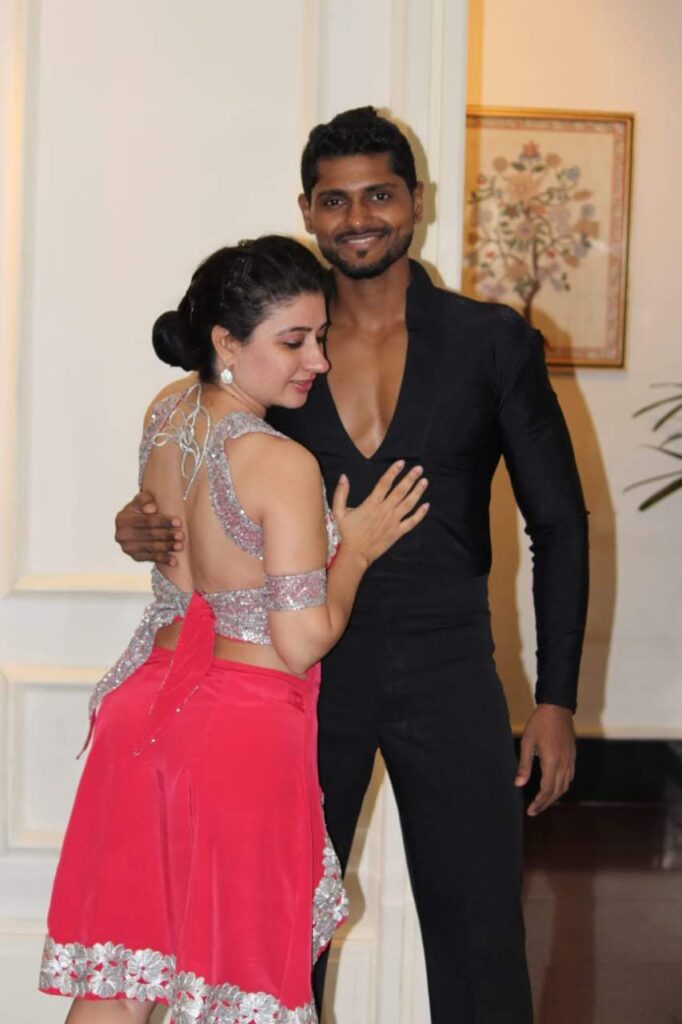
Partner dancing historically mirrors courtship: the man invites, guides, and impresses; the woman responds, interprets, and plays with the connection. This dynamic adds tension, flirtation, and drama—which, frankly, keeps people coming back.
Even today in Mumbai, it’s usually the man who asks the woman to dance. Once that happens, the assumption of leading just slides right in. You see it at weddings, those fun Malad socials, or even casual jive nights. It echoes broader patterns: guys make the first move, plan the date, decide the steps, and — hopefully — lead with confidence.
Sure, it’s rooted in tradition. But part of tradition just works on the dance floor.
But Here’s the Plot Twist: These Rules Are Optional Now
But hey — we’re in the 21st century. Women lead in boardrooms, politics, and definitely on gym floors — so why not on the dance floor too? In modern jive classes—especially social jive classes in Andheri, Thane, and Bandra—these roles are becoming flexible. Many teachers (yours truly included 😌) encourage role switching. Want the lady to lead? Yes. Want the guy to follow? Also yes. It’s called Role Rotation, and it’s basically dance liberation and it’s eye-opening every time.
Women learn how much thinking leading actually requires.
Men discover how hard it is to not anticipate and just follow.
And yes, sometimes the guy-follow accidentally leads himself into a cuddle move while the woman-lead politely waits. Growth is awkward. That’s part of it.
In the end, jive works best when both partners understand both roles. Whether you’re leading, following, or switching mid-song, the goal is the same: connection, clarity, and not crashing into the couple behind you.
Everything else? Just tradition doing its thing—until dancers decide otherwise. 💃🕺